Loading...
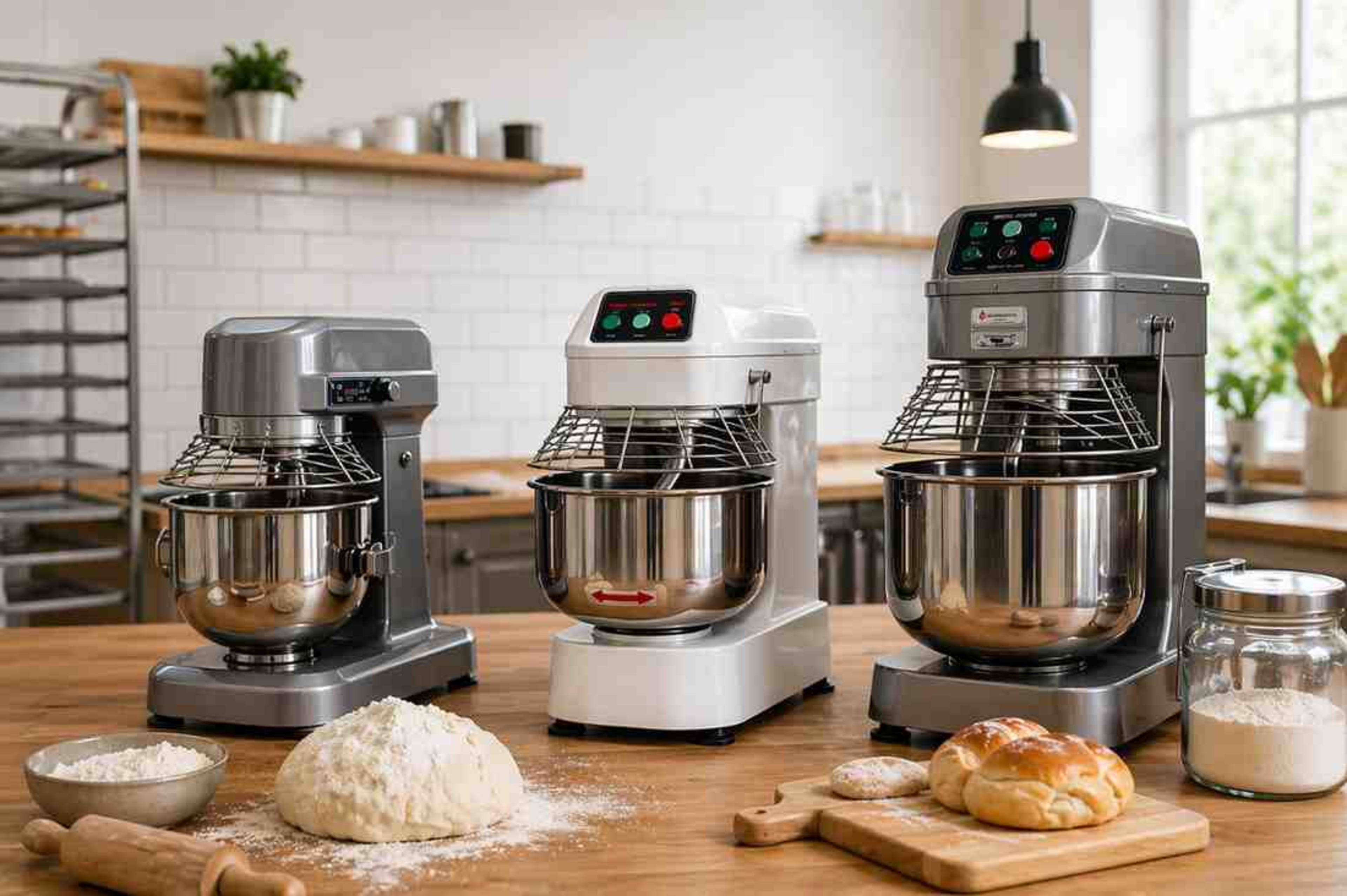
Top Dough Mixer Machines for Home & Commercial Use
4/22/2026
Global
Bakery Equipment
I’ve worked with enough kitchen setups to understand one thing: mixing dough by hand sounds appealing until your arms start to disagree. A good dough mixer saves time, effort, and a lot of frustration. Whether I’m preparing soft bread or stretchy pizza dough, the right machine makes the process smoother and more reliable.
In this guide, I’ll cover what truly matters. No fluff. Just practical insights to help you choose the right equipment for your needs.
What You’ll Learn in This Guide
* The different types of dough mixers and how they work
* Which machines are suitable for home use versus commercial setups
* Features that really matter and those you can skip
* My recommendations for mixing bread and pizza dough
* Common mistakes I see people make
* Maintenance tips to extend the life of your machine
What Is a Dough Mixer and Why I Use One
A dough mixer is a machine designed to knead and mix dough efficiently. Unlike standard mixers, it can handle thicker, heavier mixtures without difficulty.
I use it because:
* It maintains consistent dough texture
* It cuts down on manual effort
* It saves a lot of time during bulk preparation
If you’ve ever tried kneading for 15 minutes straight, you know why this is important.
Types of Dough Mixer Machines I Recommend
Not every machine is right for every kitchen. I usually suggest choosing based on your workload and the type of dough you’ll be making.
Spiral Mixers
These are my top choice for heavy dough.
* Ideal for bread and pizza
* Keeps dough temperature stable
* Works well for commercial use
If I’m operating a bakery, this is what I would select.
Planetary Mixers
These mixers are more versatile but slightly less specialized.
* Great for home kitchens
* Can mix batter, cream, and dough
* Comes with various attachments
If you want one machine for everything, this is a solid option.
Horizontal Mixers
These are designed for large-scale production.
* Handles bulk quantities
* Commonly found in factories
* Requires more space
Unless you’re running a large operation, you probably don’t need this type.
Best Dough Mixer Machines for Home
For home kitchens, I focus on practicality. You don’t need industrial power on your countertop.
What I Look For:
* Compact size
* Easy controls
* Moderate motor power
* Simple cleaning
A reliable bread dough mixer for home should be straightforward, not complicated.
If you’re exploring options, I suggest checking this internal product example: [https://betterkingkitchen.com/index.php/product/two-speed-dough-mixer](https://betterkingkitchen.com/index.php/product/two-speed-dough-mixer)
It’s a good reference for what a balanced machine looks like without going overboard
Best Dough Mixer Machines for Commercial Use
In a commercial kitchen, I prioritize performance.
Key Differences I Notice:
* Higher motor strength
* Larger bowl capacity
* Built for continuous operation
For bakery owners, I usually recommend browsing equipment categories like
👉 [https://betterkingkitchen.com/index.php/categories/bakery-equipment]
👉 [https://betterkingkitchen.com/index.php/categories/fast-food-equipment]
These will give you a better idea of what’s available for scaling operations.
Features I Always Check Before Buying
Not all features are useful. Some just sound.
Here’s what I care about:
Motor Power
Stronger motors handle thick dough better. Weaker motors struggle and wear out more quickly.
Bowl Capacity
Consider your batch size. Buying too small means extra work.
Speed Settings
Multiple speeds provide better control. Dough isn’t one-size-fits-all.
Build Quality
Metal construction lasts longer. Plastic parts tend to wear out faster.
Attachments
They can be useful, but only if you’ll use them. Otherwise, they just collect dust.
Dough Mixer vs Hand Kneading
I’ve done both. One is efficient. The other builds character.
| Factor | Dough Mixer | Hand Kneading |
| ----------- | ----------- | ------------- |
| Time | Fast | Slow |
| Effort | Low | High |
| Consistency | High | Varies |
| Scalability | Easy | Limited |
If I’m making one small batch, hand kneading is fine. Anything more, I use a machine without hesitation.
---
## Best Dough Mixer for Bread and Pizza Dough
Different doughs need different attention.
Bread Dough
* Requires strong gluten development
* Needs steady kneading
I prefer machines with stable speed and good torque.
Pizza Dough
* Needs elasticity
* Slightly softer handling
A **pizza dough mixer** should allow for flexible speed control.
---
## Common Mistakes I See Often
Even with a good machine, mistakes can ruin results.
### Overloading the Bowl
More dough doesn’t mean better efficiency. It stresses the motor.
Wrong Speed Settings
Settings Mixing too fast can damage dough structure. Slow and steady usually works best.
Ignoring Cleaning
Leftover dough hardens and affects performance. Clean it right after use.
Maintenance Tips I Follow
A machine lasts longer if you treat it well.
* Clean after every use
* Check moving parts regularly
* Keep electrical areas dry
* Store in a dry place
Simple habits make a significant difference.
---
## External Resources I Recommend
If you want to explore more detailed comparisons and expert reviews:
👉 [https://www.allianceonline.co.uk/catering-appliances/preparation/dough-mixers.html?srsltid=AfmBOoqJqMcURpurhkWWoCl-yf9Rxt8Gao_srO7Nq6T3VukhgHFdvzSS]
Final Thoughts
I’ve learned that choosing the right mixer isn’t about picking the most expensive option. It’s about matching the machine to your actual needs.
For home use, keep it simple and efficient.
For commercial setups, focus on durability and capacity.
A well-chosen dough mixer saves time, improves consistency, and reduces effort. Your hands will thank you later.