Loading...
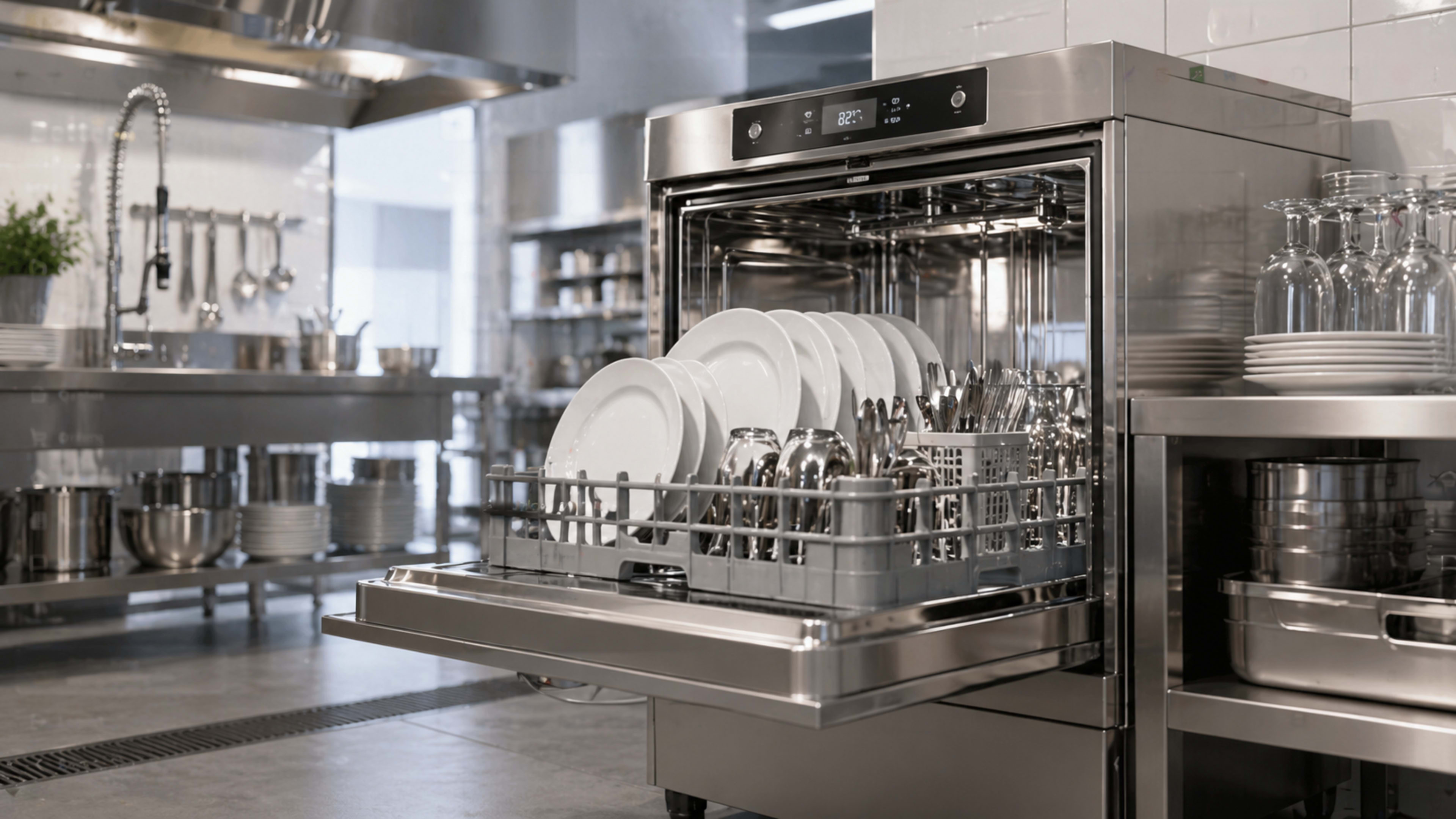
What Is a Commercial Dishwasher and How Does It Work?
4/30/2026
Global
Washing & Sanitizing Equipment
It is a high-performance dish washing machine suitable for commercial occasions, such as restaurants, hotels, cafés, bakeries, catering businesses, hospitals, schools and other industrial kitchens. Commercial dishwashers are designed for washing large numbers of plates, glasses, serving trays, pans, cutlery and kitchen utensils rapidly, hygienically and consistently far more than a domestic dishwasher in your home.
Washing dishes in a commercial kitchen is time-consuming, labour-intensive and almost impossible to manage during busy service periods. Commercial dishwashers aid in saving cleaning time, maintaining hygiene standards, controlling water usage & ensuring the kitchen workflow.
Regardless of whether you have a small café, fast-food outlet, hotel kitchen, or large catering operation the kind of commercial dishwasher you choose can have a direct impact on your speed of service, staff efficiency and hygiene levels throughout your kitchen.
What Is a Commercial Dishwasher?
A commercial dishwasher is an industrial-sized machine specifically designed to wash large quantities of dishes quickly in a professional restaurant kitchen. It incorporates high-pressure water jets, timed washing cycles, detergent, rinse aid and hot water to scrub kitchenware clean of food residue, grease, stains and bacteria.
They are mainly used for cleaning commercial dishwashers.
Plates and bowls
Glasses and cups
Cutlery
Serving trays
Cooking utensils
Pans and kitchen tools
Food preparation containers
The commercial dishwasher is primarily used for rapid and hygienic washing of items while being able to accomplish a load 10 times the amount of a standard domestic sized dishwasher.
This is especially important for restaurants and hotels, as they need to keep plenty of clean dishes ready at your disposal all day long. A slow dishwashing system can also create a bottleneck in the kitchen, affecting timing, table service and customers’ experience.
What Is the Working Principle of a Commercial Dishwasher?
Commercial dishwashers work through a professional washing process. Commercial dishwashers generally mimic a similar cleaning cycle; the actual system can vary by model.
Pre-Rinsing
Staff typically scrape residual food waste and rinse plates or cutlery before loading items into the dishwasher. Doing this ensures that no big chunks of food enter the machine and blocks the drainage.
It is particularly important because the pre rinsee will enhance washing outcomes, and also enhance the performance of dealing with greasy stains from sauces as well as oils, starches & dried food sediments.
Loading the Dishwasher Rack
Dishes, cups or glasses, forks or spoons (or knives), placed in the appropriate racks of a dishwasher. This is important because water jets are expected to reach all surfaces.
Like placing plates upright, secure placement of glasses and arrangement of cutlery (so that each object can be cleaned by water).
Main Wash Cycle
It sprays hot water mixed with detergent over the items during the wash cycle. The water power cleans grease, food scraps, and stains.
Most commercial machines are configured to go fast. Because many models can finish a cycle in less time than it takes to run a home dishwasher, they are an ideal choice for busy kitchens where you need dishes reused quickly.
Rinse Cycle
Clean hot water is used to rinse the items off once they are finished washing. Rinse aid can also be used to help water run off the surface more smoothly and reduce water marks, particularly on glasses and stainless-steel items.
The rinse or wash cycles are important from hygiene and appearance aspects. Clean dishes make a better impression on the customers in hotels, restaurants and cafés.
Drying and Unloading
Some commercial dishwashers have a drying assist, whereas others simply utilize the heat from the rinse cycle to help things dry faster. When the cycle completes, staff unloads clean dishes to be reused.
Good workflow around loading/unloading is very important. The dishwashing area in a commercial kitchen should be designed so dirty items enter from one side and clean items exit the other traffic flow routing to avoid cross-contamination.
Commercial Dishwasher vs Domestic Dishwasher
Plenty of owners ask us whether they can run a domestic dishwasher in their small café or food business. The short answer is that a domestic dishwasher was not built for the demands of a commercial kitchen.
A commercial dishwasher is different because it is designed for:
Faster washing cycles
Higher daily usage
Stronger cleaning performance
Better hygiene control
Heavy-duty stainless-steel construction
Larger washing capacity
Professional kitchen workflow
Easier maintenance in business environments
While these domestic dishwashers may suffice for household purposes, they are generally too slow and too light-duty for restaurants, cafes, hotels, bakers kitchens and catering kitchens.
Types of Commercial Dishwashers
Not all commercial dishwashers are created equal, and your right type really will depend on the size of your kitchen, washing volume, space available, and what you are washing.
Undercounter Commercial Dishwasher
An undercounter commercial dishwasher is a machine that can fit neatly underneath the counter. This is ideal for low-volume kitchens in small cafés, bars, and coffee shops.
This type is typically a good fit for smaller commercial dishwasher applications, where space is at a premium and restaurant-quality performance is still needed.
Best for:
Small cafés
Coffee shops
Bars
Small restaurants
Limited kitchen spaces
Hood Type Commercial Dishwasher
However if looking for equipment designed for medium to high volume kitchen operations, a hood type or pass-through dishwasher will work great. A rack of dishes is loaded by staff and a hood lowered before initiating the wash cycle.
This is a common type used at restaurants and hotels as it provides a precise working flow and this type can hold more dishes in comparison to undercounter types.
Best for:
Restaurants
Hotels
Catering kitchens
Busy cafés
Medium-sized commercial kitchens
Conveyor Dishwasher
A conveyor dishwasher is basically made for extremely high volume operations. Movement through the machine is on racks or trays via a conveyor system, which makes it ideal for large kitchens that need non-stop washing.
Best for:
Large hotels
Hospitals
Universities
Canteens
Large catering businesses
Glasswasher
A glasswasher is made for glasses, cups and barware only. It is used in bars, cafés, restaurants, hotels and coffee shops.
Best for:
Bars
Coffee shops
Cafés
Restaurants
Hotel lounges
Benefits of Commercial Dishwasher
Commercial dishwashers provide many uses to professional kitchens.
Faster Cleaning
One of the major advantages: speed Unlike a domestic dishwasher or using a manual wash, A commercial dishwasher does not only wash large batches of dishes but much faster too.
It also assists businesses in streamlining their lunch rush, dinner service, banquets and catering events.
Better Hygiene
Commercial kitchens need to maintain the expected hygiene standards. A commercial dishwasher removes grease, leftovers and bacteria considerably more effectively than hand washing.
There are several things that help keep your kitchen cleaner and more sanitary such as hot water, detergent to remove grease and grime, rinse cycles AND proper equipment design.
Lower Labour Pressure
Thanks to them, manual dishwashing is time-consuming and staff-consuming. By investing in an industrial dishwasher, the strain on labour is lessened and kitchen staff can focus their efforts on preparing food to serve or performing cleaning tasks that require the human touch.
Consistent Results
Hand washing results differ from person to person, especially in a busy kitchen. In contrast, a commercial dishwasher has more consistency because the machine is programmed to run through a cycle each time.
Improved Kitchen Workflow
Dirty Clutter MovesYou around a dishwashing area well planned OutOors into clean movements. This reduces delays, crowding and confusion during peak service hours.
Professional Presentation
A customer feels pampered when the plates, glasses and cutlery are clean. Presentation is equally as important to hygiene for hotels, restaurants and cafés.
How Much Water Does a Dishwasher Consume?
It is also worth noting that consumption varies according to the type, size, model and washing cycle of the appliance. A commercial dishwasher is for handling heavy loads with maximum efficiency, and many contemporary models are engineered to incur minimum water and energy losses.
The important question, in a commercial kitchen, is after how much water a dishwasher utilizes though what really matters regarding these machines is not simply how much water they use per cycle but water-use per rack or even water-use-per-number of dishes cleaned.
Depending on how it is used, a commercial dishwasher can certainly contribute to reducing water waste as opposed to constant manual washing when best practice in loading and pre rinsing are followed by staff.
Businesses should use the following checks to regulate water usage:
Water usage per cycle
Energy efficiency
Wash cycle length
Rack capacity
Rinse system design
Staff loading habits
Maintenance condition
When it comes to restaurants, hotels and catering kitchens picking the right size machine is crucial. An under-size machine will require far too many cycles, whilst an oversized machine may waste energy and space.
Cleaning a Commercial Dishwasher
Cleaning a dishwasher is basic for sanitation, execution and the future of the machine. It is necessary because if you do not maintain and clean your commercial dishwasher regularly, grease, food particles, detergent residues and limescale can accumulate.
Basic cleaning steps include:
Remove Food Waste
After the service, clear the large food debris found in the dishwasher interior, filters and drain area.
the Filters
Filters trap food remnants, and have to be washed frequently. Clogged filters may decrease washing efficiency (it can also lead to drainage problems).
Wipe the Interior
Wipe down the inside surfaces, the door area and seals and corners where dirt can build up using a clean cloth.
Check Spray Arms
Spray arms should rotate freely. Clogs will block holes, water pressure becomes weak, and dishes are not cleaned.
Use the Correct Detergent
Always use commercial grade dishwasher detergent and rinse aid. It can damage the machine and deteriorate cleaning quality, if not used properly.
Descale When Needed
Limescale can form inside of the dishwasher in hard water areas. Descaling on a regular basis will also reduce the possibilities of damaging your heating, spray system, and internal parts.
Whether a dishwasher is spotless works more efficiently, consumes less energy, and minimizes the risk of unpleasant odors or poor washing results.
Common Problem: Dishwasher Not Draining
Domestic and commercial machine problems such as a dishwasher not draining are the most common. Commercial kitchen drainage issues can easily bring kitchen operations to a halt, so any problem should be addressed immediately.
Common causes include:
Blocked filters
Food waste in the drain area
Clogged drain hose
Grease build-up
Faulty drain pump
Incorrect installation
Poor cleaning routine
To prevent drainage issues, staff should scrape down food waste prior to loading, clean filters each day and check the condition of the drain area on a regular basis.
An experienced commercial appliance technician should be called to inspect the machine if the need for a commercial dishwasher repair has developed after basic cleaning of dishwasher drains, as continued failure to drain could result in damage to other components of the machine and loss of kitchen time.
Small Commercial Dishwasher: Is it worth it?
Compact dishwashers can prove useful for limited space businesses or lower wash volume kitchens. However, if you will be using a dishwasher in a business kitchen make sure it is not a domestic model but rather a small commercial dishwasher.
A compact commercial dishwasher might be ideal for people:
Small cafés
Coffee shops
Juice bars
Small restaurants
Office pantries
Food kiosks
Small bakery shops
Before buying, consider:
The daily number of dishes you clean per hour
Available kitchen space
Type of items being washed
Water and electrical connection
Drainage position
Staff workflow
Future business growth
A compact machinelessens the spaciestake,however it shall be equally capacious to meet daily business necessity.
Choosing the Right Commercial Dishwasher
Selecting an industrial dishwasher is not only a matter of cost. Things to keep in mind are performance, durability and capacity for the business owners switching on the installation and longer maintenance services.
Check Your Washing Volume
Predict the number of plates, glasses, trays and no. of cutleries your kitchen needs to wash at peak hours. A café will not require the same type of machine as a hotel banquet kitchen
Choose the Right Type
Again, in small kitchen businesses, an undercounter commercial dishwasher may suffice. For utilities, a hood type dishwasher would be more suitable for medium restaurants. Conveyor Dishwashers – For larger operations, it could be a conveyor dishwasher.
Measure Your Space
Also, validate area available for dishwasher, loading zone, unloading zone, drainage and water requirement along with staff movement A poor kitchen layout may result in a huge bottleneck for the entire kitchen.
Consider Energy and Water Efficiency
One way to help offset operating costs over time are machines that are water-efficient and energy-efficient. This especially matters for businesses that use the dishwasher multiple times a day.
Look for Stainless-Steel Construction
As the commercial kitchen equipment needs to be sturdy, clean and easy to clean. Usually, it is made from stainless steel, ideal for professional kitchen use and heavy duty.
Think About Maintenance
Opt for a dishwasher that is easy to clean, service and maintain. And have filters, spray arms and doors readily available for cleaning.
Check Installation Requirements
Some commercial dishwashers might require you to set their specific water pressure, drainage, electrical supply, ventilation or chemical dosing. Note: Check installation requirements before buying.
Common Buying Mistakes When Purchasing a Commercial Dishwasher
Mistakes when buying a dishwasher can mean slow service, high running costs, lackluster cleaning
performance or breakdowns.
Avoid these common mistakes:
Selecting a dishwasher for domestic and commercial usage
Buying based only on price
Ignoring kitchen layout and workflow
Choosing a machine that is too small
Not monitoring water and electrical needs
Forgetting maintenance needs
Using the wrong detergent
Not training staff properly
Ignoring drainage and ventilation
Failing to plan for future business growth
A dishwasher for commercial use is a large investment e. The ideal model should be capable of handling your kitchen’s everyday workload and ensuring operational efficiency.
Is the Best Ranked Dishwasher Always a Good Choice?
Buyers search a lot online for the best rated dishwashers before their purchase. Ratings and reviews can help, but these shouldn't be the only metrics you pay attention to.
The optimal commercial dishwasher for your business based upon real kitchen operation.
So, a top rated undercounter dishwasher might be exactly what you need in your small café but completely wrong for the bustling kitchen of a 5 star hotel. In the same way, a formidable conveyor dishwasher is perfect for one big canteen but pointless for a small restaurant.
Most greats only check out best rated dishwashers:
Your business type
Daily washing volume
Available space
Budget
Energy and water usage
Cleaning requirements
Installation support
After-sales service
The appropriate dishwasher is the one which matches your workflow at kitchen and business requirements.
Why Betterking Kitchen for Commercial Dishwasher Solutions?
As a professional shop for commercial kitchen provider Big Fat Patisserie set up & providing the best of kitchen solutions for Restaurants, Hotel, Cafes, Bakeries, Catering businesses & institutional kitchens.
Apart from a machine, businesses require more than a commercial dishwasher when picking up a few things. They require appropriate equipment selection, layout planning, installation assistance and service support.
BestKitchen Guide for Commercial Kitchen Buyer Dishwashing Equipment
Kitchen size
Washing volume
Business type
Space planning
Workflow requirements
Equipment durability
Cleaning efficiency
Long-term operation
Betterking Kitchen caters to the professional segment of the foodservice industries, focusing on practical equipment: from commercial dishwasher solutions in small and medium-sized batches all the way up to large dishwashing systems for bustling kitchens.
Frequently Asked Questions
What is a commercial dishwasher?
A commercial dishwasher is a heavy-duty machine that grooms the utensils and crockery of restaurants, hotels, cafés, catering businesses and kitchens with high throughput. It cleans plates, glasses, cutlery, trays and utensils faster and more efficiently than a home dishwasher.
How Commercial Dishwashers Work
When you run a commercial dishwasher, it sprays hot water and detergent all over the dishes during a wash cycle, then rinses them with clean hot water. This process does away with food debris, fat and dirt while reinforcing hygienic cleansing.
Question: Can a domestic dishwasher be used in a commercial kitchen?
In a commercial kitchen scale, the domestic dishwasher is not provided because it is slower and not intended for a heavy daily operation. Commercial dishwashers are designed and built to handle business use with faster cycles, stronger performance, and larger capacities.
Best Type of Commercial Dishwasher for Restaurant
An undercounter commercial dishwasher is suitable for smaller restaurant operations. Hood Type Dishwasher Medium and busy restaurants prefer a hood type dishwasher. Some large kitchens require some workhorse conveyor dishwashers.
How often should a commercial dishwasher be cleaned?
You most likely clean your commercial dishwasher once a day in professional kitchens. To keep the machine cleaning well, it is important to check filters regularly, inspect the spray arms, and look for blockages in the door seals & drain area.
Why is my dishwasher not draining?
Reasons why a dishwasher is not draining include block filters, food waste or grease buildup in the sump area, clogged drain hose, and broken drain pump. To avoid this in a commercial kitchen, you would want to make sure that filters and drain areas are regularly cleaned.
Conclusion
Since the purpose of commercial dishwashers is to clean and dry dishes, glasses, and cutlery one would use in a restaurant, hotel, café, bakery, catering business or professional kitchen. The equipment also washes dishes faster, creates better hygiene, eases staff workloads, and promotes a more efficient kitchen.
Your business size, washing volume, kitchen layout, and future operational requirements are factors that define the right dishwasher for your establishment. When you buy a machine, consider the type of machine, capacity, how much water it uses, energy efficiency and difficulty in installation and maintenance.
Betterking Kitchen offers professional dishwashing solutions and kitchen equipment systems support for the modern foodservice operation for those in businesses that rely on commercial kitchen furniture.
Get in touch with Betterking Kitchen today to find the Best commercial dishwasher for your restaurant, hotel, café or commercial kitchen project.